I remember once when I was younger I was home alone. I was sitting in my room when all of a sudden I heard the front door open, the dogs barking hysterically, and the alarm going off. I wasn't expecting anyone to come home that soon, so I was scared. I waited a few seconds for the alarm to be turned off but the alarm just kept going. That's when I got scared, I flew off my bed and was about to jump into my closet to hide when the alarm suddenly stopped blaring. "Hannah Leigh?" I called timidly. "Yeah?" she replied. I thanked the Lord Almighty it wasn't an intruder and then yelled at Hannah Leigh for not texting me that she was coming home first.
The fight or flight response is something that occurs when you are scared. The sympathetic nervous system mobilizes our body for action by releasing adrenaline and noradrenaline. These hormones cause our pupils to dilate, heartbeats to accelerate, bladders to inhibit contraction, blood pressure and blood sugar to go up, and much more. We are hit with a surge of energy, and nothing else seems to matter besides getting out of harm's way.
When the emergency passes, we don't fully calm down right away. It takes some time for our parasympathetic nervous system to get our bodies under control and acting normal again. Slowly our our heartbeat begins to slow, bladders contract, bronchi constrict, etc.
I wasn't thinking rationally when I heard the door open and the alarm go off. My body just took over thanks to the fight or flight response. If, G-d forbid, I would have actually been in a dangerous situation that day, this response could have potentially saved my life. Our bodies really know what's up.
Sunday, October 6, 2013
Science's Humanities Gap
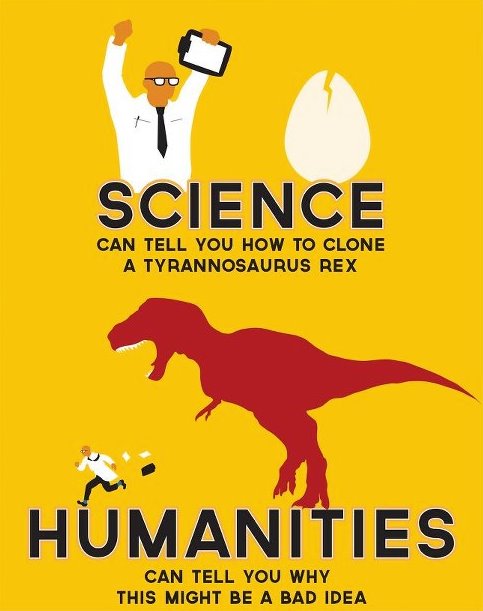
I was browsing around and I came across this article "Science's Humanities Gap" by Gary Gutting, a professor of philosophy at the University of Notre Dame. Click here to read the full article- I highly suggest reading it! In the article, Gutting responds to recent claims psychologist Steven Pinker has made regarding humanists in his sermon "Science is Not Your Enemy." Pinker pleas for humanists to pay more attention to science. This request, undeniably, is important, but what Gutting maintains throughout this article is that humanists are the ones practiced in sciences and scientists are the ones who should study more humanities.
While reading this article, I was thinking back to the bio-psycho-social approach to psychology, and how it is important at looking at something from all angles in order to come to an informed conclusion.
In his article, Gutting notes that philosophers of mind who work in cognitive science are typically trained in that discipline. On the flip side, however, there are very few cognitive scientists and neurosciences that have a comparably strong background in philosophy of mind. What do you all think- is it important to be well-versed in both philosophy/humanities and science in order to be a successful cognitive scientist or neuroscientist? Gutting brings up a very interesting conundrum that pops up often for cognitive scientists: how do scientists interpret the bearing of their results on philosophical issues such as free will and happiness without being better versed in humanities?
Gutting brings examples from all different forms of science and humanities: epistemology empirical psychology, philosophy of physics and biology to name a few. There is now an evolutionary and neurological study of literature. Historians of science are often immersed in the areas of science they study, but few scientists do serious work in the histories of their discipline. Is this necessary? How much is gained by thinking seriously about the history of one's discipline? Would focusing more time on it be more enlightening, or be a waste of time?
Here's a quote I liked, "The problem of disciplinary narrowness became critical only with the advent of "scientists"- a term invented in the 19th century- whose work became so technical that it was hard to avoid the perils of overspecialization" (Gutting). Some questions about ethics and the welfare of humans cannot be answered by science alone. Where is the gap? What do you think? Comment below!
Mike the Headless Chicken!
One day a farmer- Lloyd Olsen mother in law was coming over for dinner. His wife told him to go out and get and kill a chicken. He choose a chicken named mike, took the knife and cut off his head. He missed one ear and the brain stem. Lloyd realized that the chicken was walking around just a little balanced. I don't know what he had for dinner that night because he decided to see what this chicken would do.
Every say he fed Mike the chicken through a dropper into his throat water, milk and grains. Mike was a good chicken and lived almost normally, mines his lack of a head. 18 months after his beheading mike died choking on a piece of grain. RIP Mike he had a good life and 18 months of fame.
Besides for the story of the chicken being awesomely cool, it shows how much the brain stem has control over a body. Mike the chicken survived without a head because he had a brain stem. The proves how much the it does.
The brain stem has many different parts that all have jobs that keep us alive.
The Medulla regulate are heart and lungs. The two things we defiantly need to survive.
The Pons help the medulla with the heart and lungs. It also is in charge of our sleep and dreams and how are body moves. If you go through a few days without sleeping you can die.
The Reticular Formation deals with sleep and arousal. With our arousal we would just be sleeping all the time and die.
The cerebellum controls are balance and movement. If we didn't have balance we can just fall over and crush are body and die at any moment.
Are brain stem is awesome and is what keeps us alive. Just like it kept Mike the headless Chicken alive, it keeps us alive!
Every say he fed Mike the chicken through a dropper into his throat water, milk and grains. Mike was a good chicken and lived almost normally, mines his lack of a head. 18 months after his beheading mike died choking on a piece of grain. RIP Mike he had a good life and 18 months of fame.
Besides for the story of the chicken being awesomely cool, it shows how much the brain stem has control over a body. Mike the chicken survived without a head because he had a brain stem. The proves how much the it does.
The brain stem has many different parts that all have jobs that keep us alive.
The Medulla regulate are heart and lungs. The two things we defiantly need to survive.
The Pons help the medulla with the heart and lungs. It also is in charge of our sleep and dreams and how are body moves. If you go through a few days without sleeping you can die.
The Reticular Formation deals with sleep and arousal. With our arousal we would just be sleeping all the time and die.
The cerebellum controls are balance and movement. If we didn't have balance we can just fall over and crush are body and die at any moment.
Are brain stem is awesome and is what keeps us alive. Just like it kept Mike the headless Chicken alive, it keeps us alive!
Neural Communication!
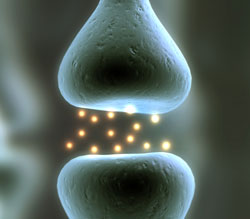
When we were learning how neurotransmitters are passed from the axon to the dendrite of another cell, binding with a certain receptor, then finally being taken back (reuptake) to the original axon. It's incredible to think that messages are sent in such a small amount of time and held in such a tiny little neurotransmitter.
I also thought it was very cool how each neurotransmitter had a specific receptor it could go with. It shows that there's order in our bodies: it's not just a free for all and a big mess, it's organized and specific. It kind of reminds me of life: there are so many people in the world, yet we really find ourselves only bonding to certain ones. Or even stronger, there's only one key to each lock. I always thought it was pretty cool how no matter how hard you try, no key will fit in two different locks. Maybe that's why I find that aspect of neural communication so fascinating.
Also, I found reuptake to be kind of cool also. At first I was like, "why would they do that?" Then I realized it's kind of like telling someone a secret. When you tell someone something, maybe you write it down, and you hand it to them to show to them but you want it back because it's YOUR SECRET. You want them to know what was written on it, or what you said, but you want to be the owner/keeper of that secret. I'm not sure if that's helpful to any of you but maybe it is!
The whole concept is just cool. If you think about it, this has been going on our whole lives. It occurs all day: while we think about Psychology, do our homework, write out blogs, or even engage in a conversation. Yet it's something that you don't feel and you don't really think "Oh! There goes the reuptake." It just happens. It's even a little freaky: our bodies are doing things all day that we don't notice. Even if we try to focus on it we can't tell what our brain is really doing. SO FASCINATING.
Here's a fun video & image about neural communication in case you totally forgot:
I also thought it was very cool how each neurotransmitter had a specific receptor it could go with. It shows that there's order in our bodies: it's not just a free for all and a big mess, it's organized and specific. It kind of reminds me of life: there are so many people in the world, yet we really find ourselves only bonding to certain ones. Or even stronger, there's only one key to each lock. I always thought it was pretty cool how no matter how hard you try, no key will fit in two different locks. Maybe that's why I find that aspect of neural communication so fascinating.
Also, I found reuptake to be kind of cool also. At first I was like, "why would they do that?" Then I realized it's kind of like telling someone a secret. When you tell someone something, maybe you write it down, and you hand it to them to show to them but you want it back because it's YOUR SECRET. You want them to know what was written on it, or what you said, but you want to be the owner/keeper of that secret. I'm not sure if that's helpful to any of you but maybe it is!
The whole concept is just cool. If you think about it, this has been going on our whole lives. It occurs all day: while we think about Psychology, do our homework, write out blogs, or even engage in a conversation. Yet it's something that you don't feel and you don't really think "Oh! There goes the reuptake." It just happens. It's even a little freaky: our bodies are doing things all day that we don't notice. Even if we try to focus on it we can't tell what our brain is really doing. SO FASCINATING.
Here's a fun video & image about neural communication in case you totally forgot:
Skip to 6:22 (for those that will actually watch it)
Hey, Mrs. Perl-
Want to get rid of those pesky migraines AND have an excuse to prevent wrinkles from forming? If you answered yes to this question, boy do I have the solution for you -- BOTOX!
That's right, Botox. As we discussed Botox earlier this week in class, I asked why Botox may be used after one suffers a concussion. I have discovered the answer! Unfortunately, after one suffers a blow to the head, post concussion syndrome commonly causes issues such as chronic migraines. Botox has actually been FDA approved as a legitimate treatment to help with a patient's chronic migraines. Adults living with chronic migraines- 15 migraine days a month with migraines lasting 4 hours at minimum- can receive three Botox injections per month to significantly reduce migraines.
The University of Michigan offers more information on the use of Botox to treat headaches:
"Several years ago both physicians and patients noticed that patients reported fewer headaches after they had received Botox® injections for forehead and glabellar wrinkles. This led to a number of clinical trials using Botox® for treatment of headache. Roughly two-thirds of the subsequent studies published in medical journals reported that botulinum toxin can relieve migraine-type headache, muscle tension headache, or chronic daily headache. Results can be dramatic. Patients who have suffered from daily headaches for years report being free of headaches for two to five months. In my experience, approximately one-third of patients will have complete relief of headaches, an additional one-third will have partial relief, and the final third will experience no change.
Want to get rid of those pesky migraines AND have an excuse to prevent wrinkles from forming? If you answered yes to this question, boy do I have the solution for you -- BOTOX!
That's right, Botox. As we discussed Botox earlier this week in class, I asked why Botox may be used after one suffers a concussion. I have discovered the answer! Unfortunately, after one suffers a blow to the head, post concussion syndrome commonly causes issues such as chronic migraines. Botox has actually been FDA approved as a legitimate treatment to help with a patient's chronic migraines. Adults living with chronic migraines- 15 migraine days a month with migraines lasting 4 hours at minimum- can receive three Botox injections per month to significantly reduce migraines.
The University of Michigan offers more information on the use of Botox to treat headaches:
"Several years ago both physicians and patients noticed that patients reported fewer headaches after they had received Botox® injections for forehead and glabellar wrinkles. This led to a number of clinical trials using Botox® for treatment of headache. Roughly two-thirds of the subsequent studies published in medical journals reported that botulinum toxin can relieve migraine-type headache, muscle tension headache, or chronic daily headache. Results can be dramatic. Patients who have suffered from daily headaches for years report being free of headaches for two to five months. In my experience, approximately one-third of patients will have complete relief of headaches, an additional one-third will have partial relief, and the final third will experience no change.
The treatment for headaches consists of approximately ten injections, five in the forehead and five in the back of the neck. Given the small dose and location of the injections, the only potential side effect is a slight decrease in forehead movement or ability to elevate the eyebrows."
- Wayne T. Cornblath, M.D.
So, Mrs. Perl, you may not be able to move your eyebrows, but there is a significant chance that you may be able to reduce your headaches! You're welcome!
So Kittens Dreaming Are Really Cute
Well whatya know. We have finished yet another tree-killing packet and even started a new one. While we have been learning about different types of psychology and the history around it, we have yet to conquer the real base of psychology- the brain and the nervous system.
The nervous system is split into two- the central nervous system (CNS) and the peripheral nervous system (PNS). You could probably guess what each one does by what they are called, but I'm going to tell you anyway so it will make my blog longer. The central nervous system controls the brain and the spinal cord (they run through the center of the body) and the peripheral nervous system controls everything else (the sides of your body).
Within these systems are different types of neurons that help send and receive information throughout the body. Afferent neurons (sensory neurons) bring sensations from the outside world to the body (so from PNS to CNS). Efferent neurons (motor neurons) bring messages from the brain to the rest of the body (from CNS to PNS). Interneurons are neurons that send messages within the central nervous system.
If you were unaware how complex the brain is, allow me to enlighten you. There are millions of different parts that make up the brain, starting all the way from tiny neurons. As you broaden your perspective, you see that each portion of the brain serves a different function. For instance, the brain stem, which sits at the nape (sorry Lily) of your neck, serves to maintain control over processes like breathing, digestion, heart rate, and blood pressure. The brain stem itself is divided up into different parts- the midbrain, pons, medulla, and reticular formation. Each of these parts is responsible for controlling something in the body. By looking deeply into how the brain works, we can deduct how psychology works.
The brain stem seems to be an extremely important part of your body. Because it regulates heart rate and breathing, it is keeping you alive. However, according to the South China Morning Post (scmp.com), the brain stem is responsible for something else as well- dreams. A study was done on 13 people with AAD, or auto-activation deficit, to see if they can dream. These people had suffered damage to their limbic system, resulting in this syndrome that caused them to sit completely idle and mute for hours if unprompted.
The results of the experiment found that these people do have dreams. They compared the dreams of normal subjects to those who had AAD. They woke the subjects with AAD from REM sleep (rapid eye movement, the stage in sleep where dreams are supposed to be most common and complex) and found that 4 of them said that they had been dreaming. This bolsters the hypothesis that the brain stem has an effect on dreaming, because these people with AAD have "a mental emptiness and no imagination during wakefulness" but are able to report dreams when they are awake.
To make this super adorable, here is a video of a kitten having a bad dream. Just watch what happens: http://www.youtube.com/watch?v=Vw4KVoEVcr0
Link to article on dreaming: http://www.scmp.com/lifestyle/technology/article/1325255/researchers-conclude-dreams-originate-brainstem
The nervous system is split into two- the central nervous system (CNS) and the peripheral nervous system (PNS). You could probably guess what each one does by what they are called, but I'm going to tell you anyway so it will make my blog longer. The central nervous system controls the brain and the spinal cord (they run through the center of the body) and the peripheral nervous system controls everything else (the sides of your body).
Within these systems are different types of neurons that help send and receive information throughout the body. Afferent neurons (sensory neurons) bring sensations from the outside world to the body (so from PNS to CNS). Efferent neurons (motor neurons) bring messages from the brain to the rest of the body (from CNS to PNS). Interneurons are neurons that send messages within the central nervous system.
If you were unaware how complex the brain is, allow me to enlighten you. There are millions of different parts that make up the brain, starting all the way from tiny neurons. As you broaden your perspective, you see that each portion of the brain serves a different function. For instance, the brain stem, which sits at the nape (sorry Lily) of your neck, serves to maintain control over processes like breathing, digestion, heart rate, and blood pressure. The brain stem itself is divided up into different parts- the midbrain, pons, medulla, and reticular formation. Each of these parts is responsible for controlling something in the body. By looking deeply into how the brain works, we can deduct how psychology works.
The brain stem seems to be an extremely important part of your body. Because it regulates heart rate and breathing, it is keeping you alive. However, according to the South China Morning Post (scmp.com), the brain stem is responsible for something else as well- dreams. A study was done on 13 people with AAD, or auto-activation deficit, to see if they can dream. These people had suffered damage to their limbic system, resulting in this syndrome that caused them to sit completely idle and mute for hours if unprompted.
The results of the experiment found that these people do have dreams. They compared the dreams of normal subjects to those who had AAD. They woke the subjects with AAD from REM sleep (rapid eye movement, the stage in sleep where dreams are supposed to be most common and complex) and found that 4 of them said that they had been dreaming. This bolsters the hypothesis that the brain stem has an effect on dreaming, because these people with AAD have "a mental emptiness and no imagination during wakefulness" but are able to report dreams when they are awake.
To make this super adorable, here is a video of a kitten having a bad dream. Just watch what happens: http://www.youtube.com/watch?v=Vw4KVoEVcr0
Link to article on dreaming: http://www.scmp.com/lifestyle/technology/article/1325255/researchers-conclude-dreams-originate-brainstem
Dr. McDreamy
This week we started to learn all about the brain. From neurons to the simple sections of the brain, everything is just so interesting. I'm not going to lie, while sitting in class this week I kept thinking back to my favorite TV show, Grey's Anatomy. When we started talking about all the different ways a doctor can test the brain and its activity, I couldn't help but image Dr. Derek Shepard standing in a patient's room ordering an EEG and a CTScan for his patient who just had a seizure. I remember an episode when one of the main characters, Izzy, was having hallucinations of her dead husband. She asked Dr. Shepard to help he track her brain activity and he used an EEG because that shows the waves of brain activity and when there was a spike, that's how they knew her hallucinations were happening. Though this showed that in fact she was having hallucinations, it couldn't tell where in the brain it was coming from, because the EEG cannot tell a functions of the brain.
While studying the different parts of the brain this week, the neurotransmitters, and their functions, I put two and two together. It sounds like Izzy was having memories, that were triggered by her acetylcholine neurotransmitters, of her husband and those memories were also being formulated in cerebral cortex. I could be wrong because we haven't studied hallucinations in details, but it seems that the lesion on her brain were making an excess amount of neurotransmitters fire triggering the memory.
Another scene you will see a lot in Grey's Anatomy is Dr. Shepard in the OR (operating room) operating on someone's brain. Sometimes he will accidentally touch a nerve and that nerve will cause something bad to happen, like the patient to have memory loss or paralysis. We learning about complex communication in the brain this week too. This means that each neural network is interconnected with another neural network. When you touch one in the wrong way, it affects other neural networks throughout the brain explaining the memory loss or paralysis cause by Dr. Shepard.
I love that when I sit down everything Thursday night for some quality time with my favorite characters, especially McDreamy, I learn a thing or two also.
Dopamine and Parkinson's Disease
In this week's class, one of the topics we discussed was neurotransmitters and their function/influence in the neural system. One of these neurotransmitters, the dopamine pathway, is responsible for the regulation of motor activity, motivation and pleasure. However, excess dopamine receptor activity is linked to schizophrenia. Starved of dopamine, the brain produces the tremors and decreased mobility of Parkinson's disease. The connection to Parkinson's was very personal to me. A close family friend of our's has Parkinson's, and perseveres through its struggles every day. I decided to research Parkinson's disease, and provide a background into what causes it, what its symptoms are, and and how it is treated.
Parkinson's disease is a progressive disorder of the nervous system that affects movement. It develops gradually, sometimes beginning with an almost inconspicuous tremor in just one hand. While the tremor may be the most visible sign of Parkinson's disease, the disorder also commonly causes stiffness or slowing of movement. In early stages of Parkinson's disease, the face may show little or no expression, or the arms may not swing as one walks. Speech can become soft or slurred. Parkinson's disease symptoms worsen as the condition progresses over time.
The cause of Parkinson's disease is unknown, but several factors appear to play a role, including: 1) Genes. Researchers have identified specific genetic mutations that can cause Parkinson's disease, but these are extremely uncommon, except in rare cases with many family members affected by Parkinson's disease. However, certain gene variations (polymorphisms) appear to increase the risk of Parkinson's disease, but with a relatively small risk of for each of these genetic markers. 2) Environmental triggers. Exposure to certain toxins or environmental factors increase the risk of later Parkinson's disease, but the risk is relatively small.
Parkinson's disease symptoms and signs may differentiate from person to person. Early signs may be slight and may go unobserved. Symptoms often begin on one side of the body and usually remain worse on that side, even after symptoms begin to affect both sides. Parkinson's signs and symptoms may include: 1) Tremor. Tremors, or shaking, usually begins in the limb, often in the hands or fingers. One may notice a back-and-forth rubbing of the thumb and forefinger, known as a pill-rolling tremor. One characteristic of Parkinson's disease is a tremor of the hand when it is relaxed, or not being used.
2) Slowed movement (bradykinesia). Over time, Parkinson's disease may reduce the ability to move and slows movement. This may make simple tasks difficult and time-consuming. Steps may become shorter when walking, or one may find it strenuous to get out of a chair. Also, the feet may stick to the floor when trying to walk, making it complicated to move. 3) Rigid muscles. Muscle stiffness may occur in any part of the body. The stiff muscles can limit range of motion and cause pain. 4) Impaired posture and balance. Posture can become stooped, or balance problems can be a result of Parkinson's disease. 5) Loss of automatic movements. In Parkinson's disease, one may have a decreased ability to perform unconscious movements, including blinking, smiling or swinging the arms when walking. Gestures can become nearly obsolete when talking. 6) Speech changes. Speech problems can occur as a result of Parkinson's disease. One may speak softly, quickly, slur or hesitate before talking. Speech may also be more of a monotone, rather than with the usual rhythms. 7) Writing changes. Writing may appear small and become difficult.
Parkinson's can also develop thinking difficulties, depression and emotional changes, sleep problems and sleep disorders, bladder problems, constipation, and sexual dysfunction.
Medications are used to target these symptoms. These medications increase or substitute for dopamine.
Because the cause of Parkinson's is unknown, definitive ways to prevent the disease also remain a mystery. However, some research has shown that caffeine — which is found in coffee, tea and cola — may reduce the risk of developing Parkinson's disease. Green tea also may reduce the risk of developing Parkinson's disease.
If you are interested in learning more about Parkinson's disease, many websites, such as Mayo Clinic provide some great information.
Source: http://www.mayoclinic.com/health/parkinsons-disease/DS00295
Parkinson's disease is a progressive disorder of the nervous system that affects movement. It develops gradually, sometimes beginning with an almost inconspicuous tremor in just one hand. While the tremor may be the most visible sign of Parkinson's disease, the disorder also commonly causes stiffness or slowing of movement. In early stages of Parkinson's disease, the face may show little or no expression, or the arms may not swing as one walks. Speech can become soft or slurred. Parkinson's disease symptoms worsen as the condition progresses over time.
The cause of Parkinson's disease is unknown, but several factors appear to play a role, including: 1) Genes. Researchers have identified specific genetic mutations that can cause Parkinson's disease, but these are extremely uncommon, except in rare cases with many family members affected by Parkinson's disease. However, certain gene variations (polymorphisms) appear to increase the risk of Parkinson's disease, but with a relatively small risk of for each of these genetic markers. 2) Environmental triggers. Exposure to certain toxins or environmental factors increase the risk of later Parkinson's disease, but the risk is relatively small.
Parkinson's disease symptoms and signs may differentiate from person to person. Early signs may be slight and may go unobserved. Symptoms often begin on one side of the body and usually remain worse on that side, even after symptoms begin to affect both sides. Parkinson's signs and symptoms may include: 1) Tremor. Tremors, or shaking, usually begins in the limb, often in the hands or fingers. One may notice a back-and-forth rubbing of the thumb and forefinger, known as a pill-rolling tremor. One characteristic of Parkinson's disease is a tremor of the hand when it is relaxed, or not being used.
2) Slowed movement (bradykinesia). Over time, Parkinson's disease may reduce the ability to move and slows movement. This may make simple tasks difficult and time-consuming. Steps may become shorter when walking, or one may find it strenuous to get out of a chair. Also, the feet may stick to the floor when trying to walk, making it complicated to move. 3) Rigid muscles. Muscle stiffness may occur in any part of the body. The stiff muscles can limit range of motion and cause pain. 4) Impaired posture and balance. Posture can become stooped, or balance problems can be a result of Parkinson's disease. 5) Loss of automatic movements. In Parkinson's disease, one may have a decreased ability to perform unconscious movements, including blinking, smiling or swinging the arms when walking. Gestures can become nearly obsolete when talking. 6) Speech changes. Speech problems can occur as a result of Parkinson's disease. One may speak softly, quickly, slur or hesitate before talking. Speech may also be more of a monotone, rather than with the usual rhythms. 7) Writing changes. Writing may appear small and become difficult.
Parkinson's can also develop thinking difficulties, depression and emotional changes, sleep problems and sleep disorders, bladder problems, constipation, and sexual dysfunction.
Medications are used to target these symptoms. These medications increase or substitute for dopamine.
Because the cause of Parkinson's is unknown, definitive ways to prevent the disease also remain a mystery. However, some research has shown that caffeine — which is found in coffee, tea and cola — may reduce the risk of developing Parkinson's disease. Green tea also may reduce the risk of developing Parkinson's disease.
If you are interested in learning more about Parkinson's disease, many websites, such as Mayo Clinic provide some great information.
Source: http://www.mayoclinic.com/health/parkinsons-disease/DS00295
Sensory Overload
In Chapter 4 of the AP Psychology book, the main subject is sensation and perception. Mrs. Perl left a lovely spot open for an outside source. Just like I did last time, I immediately searched for a connection to autism and quickly found one: sensory overload. My brother was diagnosed with moderate-to-severe autism at the age of two, so I have been dealing with the symptoms of autism for eleven years now. From a young age, Jacob has covered his eyes and ears in the presence of other people, eaten only a few foods, screamed louder than noises in the background, and fervently refused eye contact. Now I know why.
Sensory overload is the phenomenon that occurs when the senses are overloaded with information; there is too much information being sent to the brain at once that the brain can’t process at once. Children (autistic and neurologically normal) who experience sensory overload are often extremely irritable, cover their eyes and ears, make little or no eye contact, avoid being physically touched, and even make louder noises to down out what they are hearing. What are they experiencing? Sensory overload means that the senses are on hyperdrive. The eyes take in so many images with so much amplified detail in just one second of sight that the kids cover their eyes. They hear everything louder than normal and want to cover their ears. Their taste buds are extremely sensitive, so they eat a limited number of bland foods. Their clothes have to be tag free and they have trouble wearing shoes and socks because these feelings overwhelm their sense of touch. As for smell, autistic children tend to stay away from bold smells in the same way that they stay away from bold tastes because these two senses are linked. In other words, autistic people are super humans.
With the prevalence of autism today, it would seem likely that more people understand what exactly is included under the umbrella of sensory overload. This video, produced by 20/20 on ABC, has helped enlighten the world about what autistic kids feel. Yes, each child is different. However, when one child has a breakthrough like this, it is impossible to ignore. Please take the time to watch the video.
Despite her severe autism, Carly was still able to communicate. Her communication through typing is truly remarkable because it provides an unimaginably clear insight into the workings of her mind and her sensory overload. To me, this video provided an incredible new insight into my brother's behaviors. Since this is AP Psychology and autism is a psychological disease effecting 1 in 50 kids, I think it is our job to try to understand what is actually happening to these children.
Sources: http://www.additudemag.com/adhd/article/9777.html
Sensory Overload Simulation: http://www.youtube.com/watch?v=IcS2VUoe12M
Saturday, October 5, 2013
The Psychological Pursuit of Happiness
Since recently we've been studying the more technical processes in the brain, which would make for a pretty complicated and boring post, I figured I'd blog about something that would be a little happier. Something that would actually make us happier: Dopamine and Serotonin.
First let's discuss the similarities and differences between the two neurotransmitters. Both of these act as chemical messengers that are released from a nerve ending and pass through a synapse and bind to specialized receptors on a different nerve cell, which causes it to fire an impulse. The two neurotransmitters are known as two of the most important, but they both play very different roles in the brain. Dopamine regulates motor activity, motivation, and pleasure. Dopamine primarily affects the neurons in the midbrain and it interacts with five receptors in nerve cell membranes (named D1-D5). A person who suffers from Parkinson's Disease have too little dopamine while people who suffer from Schizophrenia have too much dopamine. Serotonin regulates appetite, sleep, memory, mood, hunger, and temperature. Serotonin interacts with 15 receptors and it primarily affects an area called the rap he nucleus and the neurons in the center of the brainstem as well as in the pons. Some people who suffer from depression have too little serotonin.
So, dopamine regulates pleasure and serotonin regulates our mood. Sounds like we could really use some of that stuff, right? Well, my friends, the time has come to biologically pursue happiness. Below I have listed ten ways to increase your serotonin or dopamine.
1) Eat foods rich in tyrosine or tryptophan
These foods will increase your dopamine levels because your body needs tyrosine (a hydrophilic amino acid) to make your dopamine and tryptophan to make serotonin! Some examples of foods that are high in tyrosine, no pun intended, are bananas, avocados (join me in buying the all new mini guacamole cups at Kroger), meat, poultry, lima beans, sesame seeds, and pumpkin seeds. Examples of foods with tryptophan include proteins like turkey, fish, chicken, nuts, eggs, and cheese. It is best to eat tryptophan with some carbohydrates, though. It helps to make sure your brain processes the tryptophan in the protein correctly.
2) Exercise!
Physical activity leads to higher levels of the molecules 5-HIAA and tryptophan which is used to produce serotonin. Exercising also increases dopamine concentration in the brain as well as dopamine receptors. Exercise is often used as a treatment for people who suffer from depression and Parkinson's disease due to its affect on the production of serotonin and dopamine in the brain.
3) Get Exposed to Bright Lights
Yeah, this one was a surprise to me too, but I find it pretty interesting. An article written in 2007 by Simon N. Young which was published in "The Journal of Psychiatry and Neuroscience" basically proves that the exposures to bright lights, like sunlight, increases your serotonin levels. This theory is used to explain why more people nowadays suffer from some sort of depression: since most people work indoors now while people in the past worked more outside (farms, agriculture).
4) Deal with your stress!
We've all heard it before..'stress is bad for you'..'just chill'..'relax, man'..
Well, that hippie you're imagining in your head is right. Stress is known to get rid of the dopamine in your brain. Stress also might affect sleeping and mood patterns which also has an affect on serotonin and dopamine levels. If you're feeling stressed, then you gotta find some way to deal with it. Meditation or yoga has been known to help out with that kind of stuff. I also like tea.
5) Do things that make you happy!
That same article by Simon Young also talks about a correlation between "levels of happiness and the amount of serotonin the brain synthesizes." This brings psychologists to the conclusion that "self-imposed" changes to the mood, meaning doing things to make yourself happy, increases your level of serotonin. So, go ahead and eat some ice cream or go out with friends, your serotonin needs you!
If you're looking for more ways to increase your serotonin or dopamine levels, I recommend Google. After all, aren't we supposed to take what we learn in school and apply it to our lives?
I hope this has made your lives a little bit happier.
Have a happy weekend, folks.
Sources:
http://www.marksdailyapple.com/serotonin-boosters/#axzz2gtphdhua
http://www.livestrong.com/article/301434-how-do-i-increase-serotonin-dopamine-levels/
http://www.wikihow.com/Increase-Dopamine
First let's discuss the similarities and differences between the two neurotransmitters. Both of these act as chemical messengers that are released from a nerve ending and pass through a synapse and bind to specialized receptors on a different nerve cell, which causes it to fire an impulse. The two neurotransmitters are known as two of the most important, but they both play very different roles in the brain. Dopamine regulates motor activity, motivation, and pleasure. Dopamine primarily affects the neurons in the midbrain and it interacts with five receptors in nerve cell membranes (named D1-D5). A person who suffers from Parkinson's Disease have too little dopamine while people who suffer from Schizophrenia have too much dopamine. Serotonin regulates appetite, sleep, memory, mood, hunger, and temperature. Serotonin interacts with 15 receptors and it primarily affects an area called the rap he nucleus and the neurons in the center of the brainstem as well as in the pons. Some people who suffer from depression have too little serotonin.
So, dopamine regulates pleasure and serotonin regulates our mood. Sounds like we could really use some of that stuff, right? Well, my friends, the time has come to biologically pursue happiness. Below I have listed ten ways to increase your serotonin or dopamine.
1) Eat foods rich in tyrosine or tryptophan
These foods will increase your dopamine levels because your body needs tyrosine (a hydrophilic amino acid) to make your dopamine and tryptophan to make serotonin! Some examples of foods that are high in tyrosine, no pun intended, are bananas, avocados (join me in buying the all new mini guacamole cups at Kroger), meat, poultry, lima beans, sesame seeds, and pumpkin seeds. Examples of foods with tryptophan include proteins like turkey, fish, chicken, nuts, eggs, and cheese. It is best to eat tryptophan with some carbohydrates, though. It helps to make sure your brain processes the tryptophan in the protein correctly.
2) Exercise!
Physical activity leads to higher levels of the molecules 5-HIAA and tryptophan which is used to produce serotonin. Exercising also increases dopamine concentration in the brain as well as dopamine receptors. Exercise is often used as a treatment for people who suffer from depression and Parkinson's disease due to its affect on the production of serotonin and dopamine in the brain.
3) Get Exposed to Bright Lights
Yeah, this one was a surprise to me too, but I find it pretty interesting. An article written in 2007 by Simon N. Young which was published in "The Journal of Psychiatry and Neuroscience" basically proves that the exposures to bright lights, like sunlight, increases your serotonin levels. This theory is used to explain why more people nowadays suffer from some sort of depression: since most people work indoors now while people in the past worked more outside (farms, agriculture).
4) Deal with your stress!
We've all heard it before..'stress is bad for you'..'just chill'..'relax, man'..
Well, that hippie you're imagining in your head is right. Stress is known to get rid of the dopamine in your brain. Stress also might affect sleeping and mood patterns which also has an affect on serotonin and dopamine levels. If you're feeling stressed, then you gotta find some way to deal with it. Meditation or yoga has been known to help out with that kind of stuff. I also like tea.
5) Do things that make you happy!
That same article by Simon Young also talks about a correlation between "levels of happiness and the amount of serotonin the brain synthesizes." This brings psychologists to the conclusion that "self-imposed" changes to the mood, meaning doing things to make yourself happy, increases your level of serotonin. So, go ahead and eat some ice cream or go out with friends, your serotonin needs you!
If you're looking for more ways to increase your serotonin or dopamine levels, I recommend Google. After all, aren't we supposed to take what we learn in school and apply it to our lives?
I hope this has made your lives a little bit happier.
Have a happy weekend, folks.
Sources:
http://www.marksdailyapple.com/serotonin-boosters/#axzz2gtphdhua
http://www.livestrong.com/article/301434-how-do-i-increase-serotonin-dopamine-levels/
http://www.wikihow.com/Increase-Dopamine
Subscribe to:
Posts (Atom)