Sunday, November 10, 2013

Yawning... I'm Tired.

Everybody yawns. In fact, if you look at me at any point during davening, I will probably be yawning. What is exactly is yawning? Is it a biological, psychological, or social phenomenon? Naturally, like anything else we learn in psychology, it is all three.

I'll start by explaining the biological phenomenon. Scientists know that yawning is a reflex where air is  inhaled and, simultaneously, the eardrums are stretched. Sometimes the rest of the body stretches too. Yawning has been found in humans, animals, and even unborn human babies. The exact cause of yawning is unknown, but scientists have come up with a few theories. The first theory is the theory that yawning occurs when the blood contains too much carbon dioxide and requires a large influx of oxygen to correct this. Another theory is that the muscles of the mouth, jaw and throat feel the spontaneous need to stretch. A third (and extremely popular) theory is that yawning happens when a subject feels boredom or tiredness. Alternatively, you might yawn if you see someone else yawn. Yawning is contagious. Now, I will introduce you the greatest thing since sliced bread: TED-Ed.


The video basically said it best. There are a bunch of theories (both physiological and psychological) about why yawning is contagious. Interestingly enough, we already learned about the debate between John Locke vs. Emmanuel Kant about whether perception is learned or innate. It would seem that the perception of someone else's yawn causing you to yawn is learned. The proof of this is that contagious yawning begins around age four or five, when the child has already developed certain perception features and the mirror neurons are more pruned. However, yawning has also been found in unborn babies in the womb. I think that the yawn itself is a biological instinct for a spontaneous influx of air and for muscle stretching and the contagious yawning is a learned social phenomenon.

Questions (for Rachel) -- Which theory best explains yawning and contagious yawning? Is a combination of theories necessary to fully understand this phenomenon? If so, which theories seem the most plausible to you? What do you think might be the evolutionary benefits of a yawn?

Saturday, November 9, 2013

Sweet Dreams

Sleep and dreams are quite fascinating, but quite mysterious as well. Out of all of the articles I've read about sleep and dream that I hoped would inspire me to write a good post, I just kept seeing over and over again how little psychologists and researchers really know about sleep and dreams. Why do we dream? Why do we dream about what certain things? What do our dreams mean? Why do we sleep? Why can some people have lucid dreams while others can't? These are all questions that psychologists struggle with. I read about a recent study in Japan that is getting researchers closer to an answer--or at least they think so.

Researchers in Japan used a technique called neural decoding, which uses measurements of brain activity to predict visual content. Basically, these researchers are trying to see if they can predict what people will dream about by looking at their brain activity. Seems pretty cool, right? In this study, the researchers used MRI and EEG scans to monitor the brain activity of 3 adult males while they slept. They would wake up the men several times per hour and asked to report what they had been dreaming about. They did this so they could connect the brain activity the researchers saw with what the men were seeing in their dreams. After a few days, the researchers had over 200 dream reports that they put into different categories (cars, women, sports etc). Then, the researchers showed the men pictures that represent the different categories. So, they would show the men a picture of a car or a woman or something like that. While the men looked at the pictures, the researchers conducted the same brain scans that they had done while the men were sleeping. They saw that the brain activity while sleeping was pretty similar to the brain activity used for visual processing while awake. Apparently, the neural processing was so similar that the researchers were able to predict the visual content of the mens' dreams with 75%-80% accuracy. Seems pretty crazy, right? The ability to actually predict what people are dreaming about is a big step for dream research as a whole and the psychology of dreams and sleep.

We still are pretty clueless when it comes to dreams. As of now, yes, we have our theories, but still can't seem to figure it out. The wish fulfillment theory--the idea that our dreams have hidden meaning and are sending us messages, the information process theory--when we dream we are going through our memories and deciding if they are worth keeping, developing and preserving neural pathways--see and hear images while out neural networks are pruning, and the activation-sythesis theory--stimulation that your mind can't make sense of so we interpret it in some strange way--these are theories we have now that attempt to explain our dreams.

Yeah, so I guess I could deal with some of these theories, but what about lucid dreams? To me, lucid dreams are the definition of divided consciousness. A person can be asleep, paralyzed as if in REM sleep, and be completely aware in a dream. This seems really cool, as long as its not a nightmare. Lucid dreamers have claimed to be able to have supernatural powers in dreams and can even have conversations with other dream characters. These dreams seem so real that they can even be confused with reality. Not sure if this is true, but I saw somewhere that a person was reported to have woken up with a heart attack and reportedly waking up from a lucid dream in which he was shot in the heart by another dream character. Psychologists say that lucid dreaming occurs in REM-partial waking state. During lucid dreams, there are no alpha waves and the prefrontal and parietal lobes are reactivated (they are usually deactivated in REM sleep). That is why lucid dreamers are able to have logical thoughts in their dreams.

All very interesting, yet there are still very few answers out there. Would you want to have lucid dreams? Would they confuse you? I feel like as cool as they could be, I'd probably rather live in my dreams than in reality...and that could be an issue.

Anyway,
Sweet Dreams, my friends.

Monday, November 4, 2013

Lucid Dreaming

I have heard many times about the concept of lucid dreaming, but I never really looked deeply into it. Lucid dreaming, on simple terms, is knowing you are dreaming. Usually this happens while in the middle of a dream. Suddenly you are hit with the realization that it is not reality, that you are dreaming. Sometimes it is even possible to control what happens in your dream while lucid dreaming. Some people can lucid dream easier than others, and there are ways to train yourself to experience lucid dreaming:


In one study, an EEG was used to monitor a person's dreams. The dreamer used predetermined eyelid motions to send the message that they were lucid dreaming, and the EEG showed that it was during REM sleep. Exactly what goes on during the REM sleep that allows us the ability to lucid dream is unclear. Dr. Matthew Walker, a sleep lab director at Berkeley, gives the opinion that the lateral prefrontal cortex, which helps with logic, should be inactive during sleep, but it happens to awaken during a dream and, therefore, combines logic and dreaming to produce lucid dreams.

Whatever the reason may be for lucid dreaming, the whole concept is SO COOL. I'm thinking I might have to try it out. What do y'all think about lucid dreaming? Would you give it a try?


Synesthesia is Super Strange.

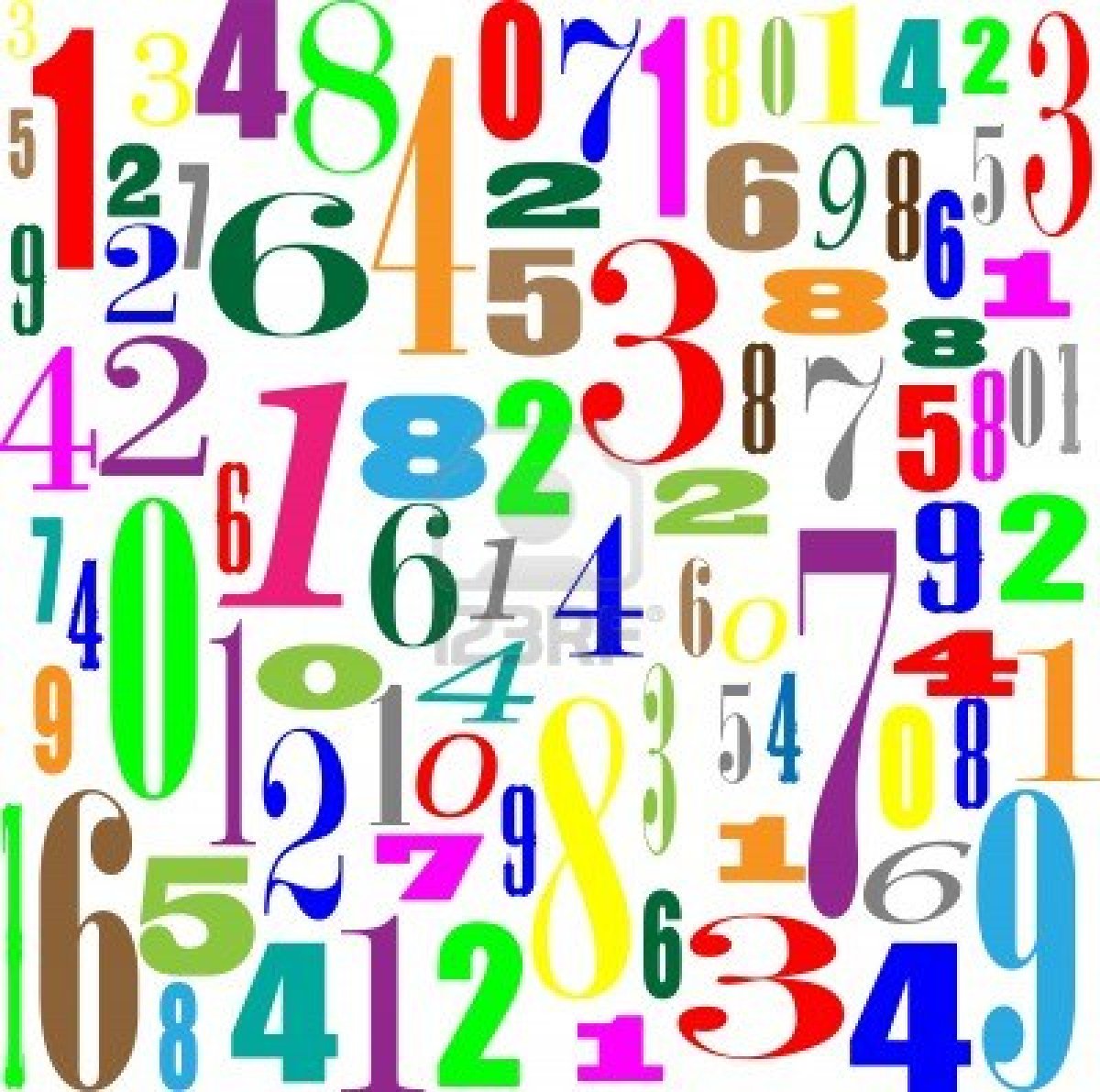
When you have a roommate that says - "7 and 3 are yellow, 4 and 8 are purple and green and 5 is very red" You will also look at her like she fell of planet mars. What does she mean numbers are colors? She makes no sense. Colors are colors like.
Numbers are numbers like.
If they are together they look like this.
What is she saying that she sees numbers as a color. When she thinks of 7 she mixes it up with 3 because they are both yellow. I just don't understand. 
Now I know theirs a psychological disorder called Synesthesia. However is that the same thing or something else? 
Well not many people know about Synesthesia or what it is. So let my shed some light on it. Synesthesia is a condition in which one sense (for example, hearing) is simultaneously perceived as if by one or more additional senses such as sight. Another form of synesthesia joins objects such as letters, shapes, numbers or people's names with a sensory perception such as smell, color or flavor. The word synesthesia comes from two Greek words, syn (together) and aisthesis (perception). Therefore, synesthesia literally means "joined perception."
Synesthesia can be between any senses. However the most common one is, colored letters and numbers. It occurs when someone always sees a certain color in response to a certain letter of the alphabet or number. Another form can be people who hear sounds in response to smell, who smell in response to touch, or who feel something in response to sight. Just about any combination of the senses is possible. There are some people who possess synesthesia involving three or even more senses, but that is extremely rare. 
People who have synesthesia though hardly ever agree on what things they perceive. It is unique to every person. 
So how does this weird thing happen? What is going on the brain that is causing this?
Some scientists believe that synesthesia results from "crossed-wiring" in the brain. They hypothesize that in synesthetes, neurons and synapses that are "supposed" to be contained within one sensory system cross to another sensory system. It is unclear why this might happen but some researchers believe that these crossed connections are present in everyone at birth, and only later are the connections refined. For people with synesthesia that connection never breaks causing sensations to move between different parts of the brain causing them to mix things up. 
There are many other ideas to what causes synesthesia but no one really knows why. 

I think my roommate has Syneshesia? Do you?

Sunday, November 3, 2013

My Pre-Shabbat Accident

Pre-dead-skin-cutting
Before Shabbat, I was rushing to finish cooking. I was trying to make sure everything was ready so I could quickly jump in the shower and run to Shul. I was checking the things in the oven, boiling some water, making some matzah balls, and all the sudden I remembered: "shoot! I forgot to chop the onion I wanted." So I quickly ran to where I keep the onions and went to take out a knife. I'm just sitting chopping my onion, minding my own business, thinking about what else I need to do, and then I started really rushing. So I'm speedily chopping my onion now and BAM! I saw the knife go against my finger, so I put the knife down and immediately looked away because I'm frightened of blood, and then I thought (for a split second): "wait, this totally doesn't hurt and it didn't when I cut it." After I made someone quickly come check out the damage and after they finally convinced me my thumb really wasn't chopped in half I looked at it. There was a lot of blood. Ew. I put a paper towel on it and I could feel that there was definitely a little flap of skin that was being touched, but it still didn't hurt really. Today, when I realized there was a chunk of dead skin on my thumb I made my dad cut off and guess what - Yep, you guessed it - still no pain.
Post-dead-skin-cutting: check out that chunk! (or lack there of)
I have two questions: 1) Why on earth did I not feel pain?? 2) Why now, with my missing chunk of skin, am I more sensitive to touch? 

For the second question, like we learned a few chapters ago, I guess the actual nerves/receptor sites in my fingers are more exposed than normal. So when I touch my normal thumb, the afferent neurons that are being sent from the receptor sites to my central nervous system are functioning normally. But when I touch my thumb with the chunk missing, I'm much closer to the nerve and so the touch is more intense. I don't know! Just my guess! What do y'all think?

For my first, more related to this chapter, question: WHY DIDN'T I FEEL PAIN?! It really is kind of irritating. I chopped a chunk of my thumb off.. shouldn't that hurt? In class we discussed the concept of nociceptors (sensory neuron (nerve cell) that responds to potentially damaging stimuli by sending nerve signals to the spinal cord and brain). So obviously me cutting my thumb was potentially damaging.. was my brain just not in the mood to receive the signals? We also discussed the Melzack and Wall's Gate control theory: there's a small channel and a big channel. If the big one is open (and the small one closed) we feel normal or no pain, and if the small one is open (and the big one is closed) we feel pain. According to this theory, I didn't feel pain because my big channel was opened and my small one was closed! That's just the strangest thing. As we said though, with the bio-psycho-social approach, other things could have influenced my experience of pain. I had expected for it to be much more painful, so maybe it wasn't as painful because of this; I was a little distracted by not looking, maybe it wasn't as painful because of that; I was also around others, maybe they calmed me down and I didn't want to look like a baby in front of them! SO MANY POSSIBILITIES! What do you think?

I find some crazy examples of other people not feeling pain in painful circumstances:
1) Kevin Ware - University of Louisville's basketball player - whose leg actually snapped during a game a few months ago, said in an interview:  "It was one of those things where I couldn't believe it. I honestly didn't feel the pain. It was more a shock," Ware said." If you didn't see the video click here. (warning: if you're easily nauseated.. it's disgusting). HOW DID HE NOT FEEL THAT PAIN?!
2) 12-year-old with no pain -- This is the craziest thing I've ever seen. Watch the video that comes up after the little boy's picture! Not only is it pretty crazy that this girl was born not ever feeling pain, but her family and herself is so positive. It's so nice. If you don't watch this video you're seriously missing out. How can Psychology explain CIPA?
And here's a cool link with some facts about pain: click here.

Buzzfeed Has An Article For Every Occasion

         This week in class we looked into depth perception and illusions. Since illusions are just a tad more interesting (in my opinion), I decided to discuss them in my blog. We study illusions, or things that defy normal perception, to allow us to see what we actually perceive. There are many different types of illusions:

         The moon illusion: when the moon looks gigantic, it is because it's being compared to other buildings and trees. It is normally in the sky, chilling by itself, so it looks smaller. 
         The ponzo illusion: linear perspective causes us to perceive lines farther away as bigger if they cast the same retinal image as lines that are closer up. 
         Ames room: we assume one person is drastically bigger than the other because it seems that they are the same distance away when they aren't. 
         The horizotal-vertical: large buildings or structures appear to be taller than they are wide, when they're actually as high as they are wide.
         The Muller-Lyer illusion: angles "in" appear to be smaller and closer and angles "out" appear to be larger and farther away. 

         Another illusion that was talked about earlier in the packet is the phi phenomenon. This is the illusion of movement when two adjacent lights blink on and off. All of these illusions can show us that top-down processing can alter the way we perceive things. 

         Many of the other principles discussed in this unit, such as monocular cues, are involved with illusions. For instance, relative height and relative size have to do with the moon illusion, linear perspective with the ponzo illusion, and relative size with the Ames room. 
         While we were learning about all of these illusions, I happened to stumble across a buzzfeed article labeled "17 Mind-Mangling Optical Illusion Gifs" and I immediately thought of this blog. Some of the illusions in the article have to do with negative afterimage and other aspects that we discussed as well. Mostly it was really cool to try these out, so try these out!


Legalizing Cannabis

(I apologize in advance if this is written poorly.. I've been writing college stuff all day and am tired of making words into sentences already.)

So, I was reading Chapter 5 of the book the other week, and that very same day I was watching (some form of) the news, and the guy said that 58% of Americans now support the legalization of weed/pot/marijuana/whatever you want to call it. I thought this would be something fun to discuss on the blog. Not really about the specifics about marijuana use, but more of an open discussion on what we think about it. This blog would be nothing without a link to the NYT, so here you go. Click here. Instead of your typical article, this one is a timeline of the "Milestones in U.S. Marijuana Laws". Let us explore some of the milestones: (note- this list ends with the 70s. I think I'll blog a part II at a later point. Too much history)

-1914: Harrison Act: The Harrison Narcotics Tax Act is enacted. This taxes opiates and lays the groundwork for future drug laws.
-1930: Narcotics Bureau: An agency established to enforce The Harrison Act. The same person who directs this bureau was an assistant commissioner of prohibition. (We all know how well that lasted, am I right?)
-1935: The Uniform State Narcotic Law: Modeled on the Harrison Act, this act brought state laws into accordance with federal statues in fighting drug sales and abuse.
-1936: Reefer Madness:This as an anti-marijuana propaganda film that was also known by the name "Tell Your Children". In the film, one puff of marijuana cigarette leads to many deaths. If you're dying to watch the film, here it is.
-1945: LaGuardia Report: The mayor of New York appoints a Committee on the Marijuana Problem to study the effects of the drug. The committee found that "the practice of smoking marijuana does not lead to addiction in the medical sense of the word" and that the drug is "not the determining factor in the commission of major crimes." (The mayor continues to enforce prohibition of marijuana, though)
-1970: Norml: The National Organization for the Reform of Marijuana Laws is founded by a lawyer. They advocate for the legalization of marijuana through lobbying and litigation. 
The Shafer Commission: National Commission on Marijuana and Drug abuse is created by Nixon to "determine its medical effects and its relation to crime and delinquency" Shafer leads the commission. "When it becomes clear that the group will advocate the legalization of small amounts of marijuana, Nixon states publicly that he will disregard the advice of the commission he created." 
Controlled Substance Act: Classifies drugs on 4 different categories of seriousness. Marijuana is Category 1- one of the most dangerous substances with the one of the highest penalties. 

What do you all think about the legalization of marijuana? Medicinal? Recreational? What would this mean in terms of the economy? Why do you think things like cigarettes and alcohol aren't being contested? What did you think about Reefer Madness if you watched it? Based on your reading, what can you add to this? 

Stay tuned for more historical information! Cool story, bro! 


"The Closer You Look, the Less You'll See"

Jesse Eisenberg, an actor from Queens, New York, played an illusionist, J. Daniel Atlas, in the recent movie, Now You See Me. Now You See Me is about a group of 4 different kinds of magicians that are brought together to set an old man's wrongs right.

In the opening scene of the movie, Atlas does a card trick. He flips through a deck of cards and asks a woman if she saw a card clearly. She replies, "no," because he went too fast. He flips through them again and she remembers a card that she saw. Atlas then fans out the cards, and asks the woman if she sees her card. She says, "no." He immediately tells her, "you are looking too closely. The closer you look, the less you'll see." Atlas then throws the cards up in the air, and the woman's card, the 7 of diamonds, lights up on the side of a building.

It is true that when you look too closely at something, you wont understand it or see it as well. You cannot look closely at an illusion or else it won't work. Illusions are something that, when you first look at it, you see the illusion.

For example, when you look at this picture you immediately see that it says "life" without looking at it very closely. When you look at it closely you see that the word is made of of little lines in each checker. You cannot see an illusion if you immediately look too closely. 


If you haven't seen the movie, Now You See Me, I recommend it not only because it is simply awing, but it has so many cool illusions. 


The Illusion of Movies, or Motion Pictures

I love movies. I'm sure we all love movies. Even if movies aren't your thing, what about gifs? What about little animated sketches or video chat? How do our minds process moving pictures? What is actually happening in the brain when we watch an animated movie and see that the characters are in constant motion despite our intellectual awareness that the images we see are just individual drawings put together? To help answer these questions, I would like to call upon the wonderful TED-Ed.


Sensation and perception are always happening. Our eyes are constantly sensing the light energy, transducing it in the retina, and sending these neural messages up to the brain. From there, perception always happens. Both binocular and monocular cues are used throughout sensation and perception. The most important two monocular cues are motion perception and the Phi Phenomenon. Motion perception is the perception that larger objects appear to move slower than smaller objects. The Phi Phenomenon is the illusion of movement when two adjacent lights blink on and off, as illustrated below.


In the case of moving pictures, images are drawn as if motion was occurring. If you flipped through the images slowly, it wouldn't seem like the picture was moving. As the video emphasized, the thing that allows us to perceive moving animations is the rate of frames per second. When the rate of the images shown is between 8 and 12 frames per second, consistent motion can be perceived. At 24 frames per second, the motion seems fluid and, most importantly, real. This optical illusion has been in use since the early days of moving pictures. Images captured on film were played back at around 24 frames per second so that the pictures looked like they were moving. How cool is that? In time, the technology and understanding of this optical illusion seemed like common sense, so we didn't think about it as much. Next time you watch an animated movie or even a regular movie, take a moment to think about what your brain is sensing and what you are, in turn, perceiving. 

Thursday, October 31, 2013

Illusions: How and Why?

Illusions. They fascinate us. We are constantly baffled by their distortion of reality. Illusions defy normal perception and thus allow us to give insight into our perceptions. Some common illusions are: the moon illusion, the Ponzo illusion, the Ames room illusion, the horizontal-vertical illusion, and the Muller-Lyre illusion. I recently stumbled across a TEDEd video called "Why Do We See Illusions?" I was faced with a question on the page of the video: why can't our extremely complex eyes clarify simple illusions?! Well, here is what I found.

The educator on this video, Mark Changizi, began by explaining this simple illusion:

The brain has evolved to handle the natural stimuli it receives. How does the brain counter this simple image, two straight lines, and interpret it as "bulging out?" Well, when we move, we leave an optic blur on the retina, and everything shoots to the side. Cartoonists use these "blurred lines" created by the optic blur to produce the illusion of movement, which the brain interprets as movement. However, it's the stimulus that has these blurred lines, which in return informs the brain that we are moving. When we move forward, our eyes fixate, much like a camera, and every time we move, everything whooshes to the side, and we are able to distinguish the direction we are moving in. In the illusion shown above, the brain is fooled into thinking we are moving towards the center.

The brain takes 1/10 of a second to create a perception. Perception is behind. In order to keep up with the world, the brain has to think, "What will the world look like in a tenth of a second?" However, by the time the brain has completed thinking of the future, the future will have already arrived, and walla, we perceive the present! The brain is filled with mechanisms to compensate for its "slowness."

The illusion is explained by the following example. When approaching a doorway, the sides look parallel. However, after nearing it, the parallel lines seem to be blown out. When first coming towards the doorway, the brain receives no cue, and perceives it as two vertical lines. But, when adding cues, such as the optic blur cue, the brain perceives the door as bulging, creating an illusion.

And that's why we see illusions!

On a side note, illusions are failed perceptions because they are static images on a page. They don't change.

Anyways, I found this cool.

Here's the link to the video. It's super delightful.


http://ed.ted.com/lessons/why-do-we-see-illusions-mark-changizi#watch